

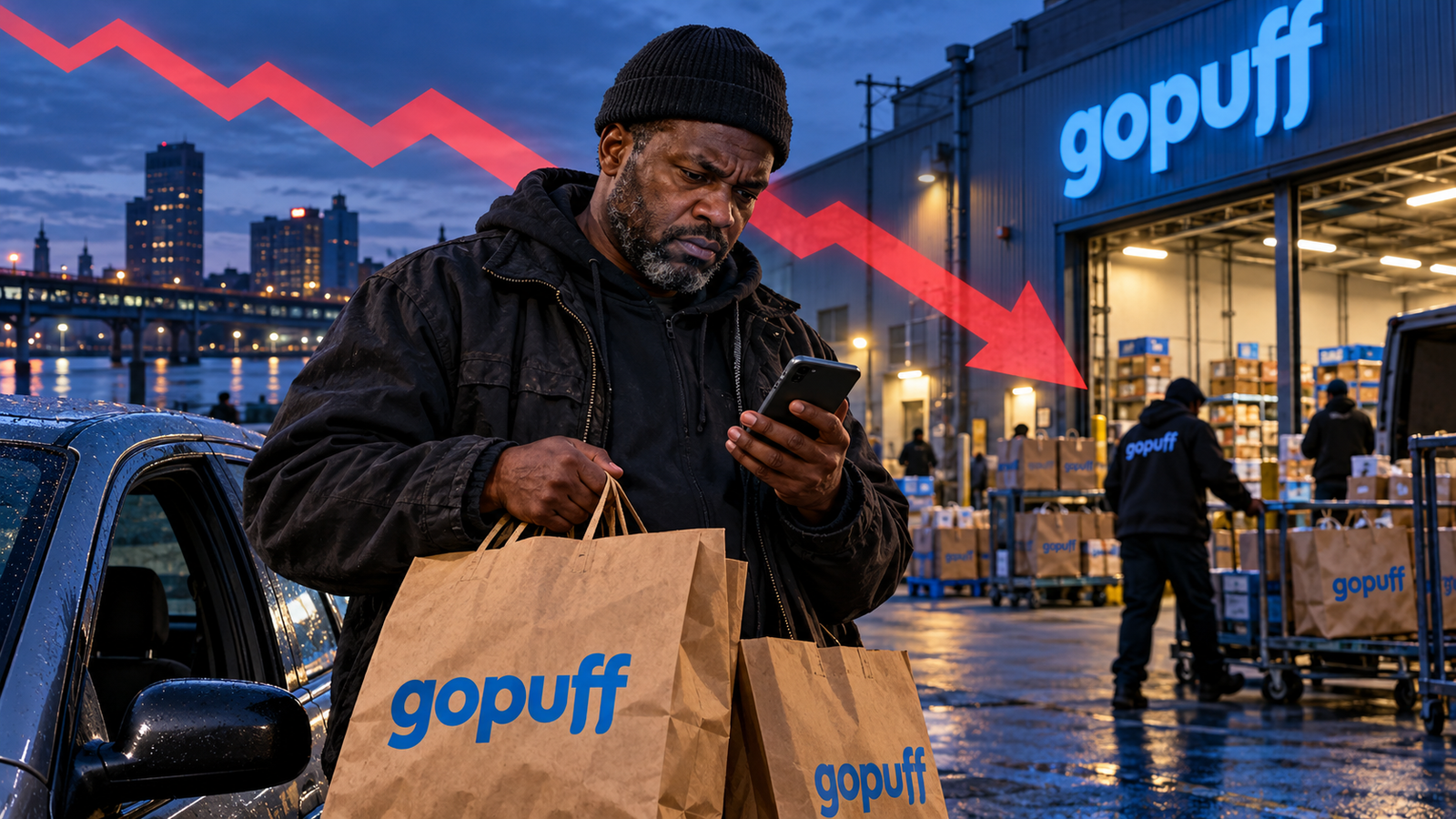

When Gopuff first arrived in Bridgeport, Connecticut, it offered drivers an opportunity to earn money delivering everyday essentials. But according to one former driver, the work became less rewarding as the business expanded and changed its pay structure.
I spoke with someone who drove for Gopuff in Bridgeport during its early days. He described a gradual shift: weekly bonuses became harder to earn, an hourly earnings guarantee gave way to paid waiting time, and shorter deliveries began paying less.
His experience raises a straightforward question: As Gopuff grew in Connecticut, how much of that growth benefited the drivers making its deliveries?
What Is Gopuff?
Gopuff is a delivery service where customers order items such as snacks, drinks, household supplies, and cases of water through an app.
In the Bridgeport operation the driver described, workers packed orders at a local warehouse, often in brown paper bags bearing the Gopuff name. Drivers waited outside, picked up orders, and delivered them to customers’ homes.
Unlike a shopping assignment, the driver’s job was to pick up a prepared order and deliver it to its destination.
Early Gopuff Driver Pay Included an Earnings Guarantee
According to the former driver, scheduled shifts—known as blocks—initially came with a minimum earnings guarantee of approximately $10 an hour.
A four-hour block therefore meant at least $40, even when business was slow. If deliveries generated less than the guaranteed amount, he recalled, Gopuff made up the difference.
That mattered during the company’s early days, when a driver might receive only one or two orders in an hour.
Drivers also had opportunities to earn weekly delivery bonuses. He recalled separate rewards for reaching milestones such as 10, 20, 30, and 40 deliveries. Those bonuses could add together, providing a reason to keep working toward the next target.
He remembers earning opportunities totaling roughly $125 in weekly bonuses.
More Orders Made the Work Worthwhile
The former driver recalled an initial base pay of $4 per order, plus customer tips.
That rate became more attractive when business picked up, and he could take several orders on one run.
Seven orders at $4 each meant $28 before tips. With tips, he said, a run could bring in approximately $35 to $40.
During that period, he recalled earning more than $100 a day regularly.
The combination of delivery volume, tips, and weekly bonuses made the work worthwhile for him. But he said that combination gradually changed.
Weekly Delivery Bonuses Stopped Adding Together
One of the first changes he noticed involved milestone bonuses.
Previously, he recalled, drivers could collect separate bonuses as they reached successive delivery targets. Under the later structure he described, reaching a higher milestone earned the listed reward without adding together all the earlier rewards.
He also remembers the delivery targets increasing, requiring more deliveries to qualify. The exact thresholds remain unconfirmed.
For him, the result was fewer bonus dollars for the work he completed.
Wait Pay Replaced the Hourly Guarantee
Another major change, according to his account, was replacing the hourly earnings guarantee with pay for eligible waiting time during scheduled blocks.
He recalled that wait pay stopped when an order was assigned and resumed after he completed the delivery and returned to the warehouse.
Then he said drivers began receiving their next assignment before finishing their current deliveries.
That meant he could return to the warehouse with another order already assigned, pick it up, and head back out without a new period of paid waiting.
Shorter Gopuff Deliveries Began Paying Less
The former driver also described a shift away from the flat $4 per-order payment.
Longer deliveries could pay more. A trip from Bridgeport to Stratford, for example, might offer approximately $5. But nearby deliveries could pay less than the previous rate—sometimes around $2, he recalled.
Because many deliveries were within a limited service area, he said the lower-paying trips made up much of his work.
For this driver, higher pay on some longer trips did not offset the lower pay on the nearby orders he delivered most often.
Gopuff grew in Connecticut, but the drivers who helped build its delivery business faced shrinking bonuses, the loss of an hourly guarantee, and lower pay for nearby deliveries.
These concerns extended beyond Connecticut. In 2021, Gopuff drivers organized a strike over cuts to guaranteed pay and delivery bonuses.