

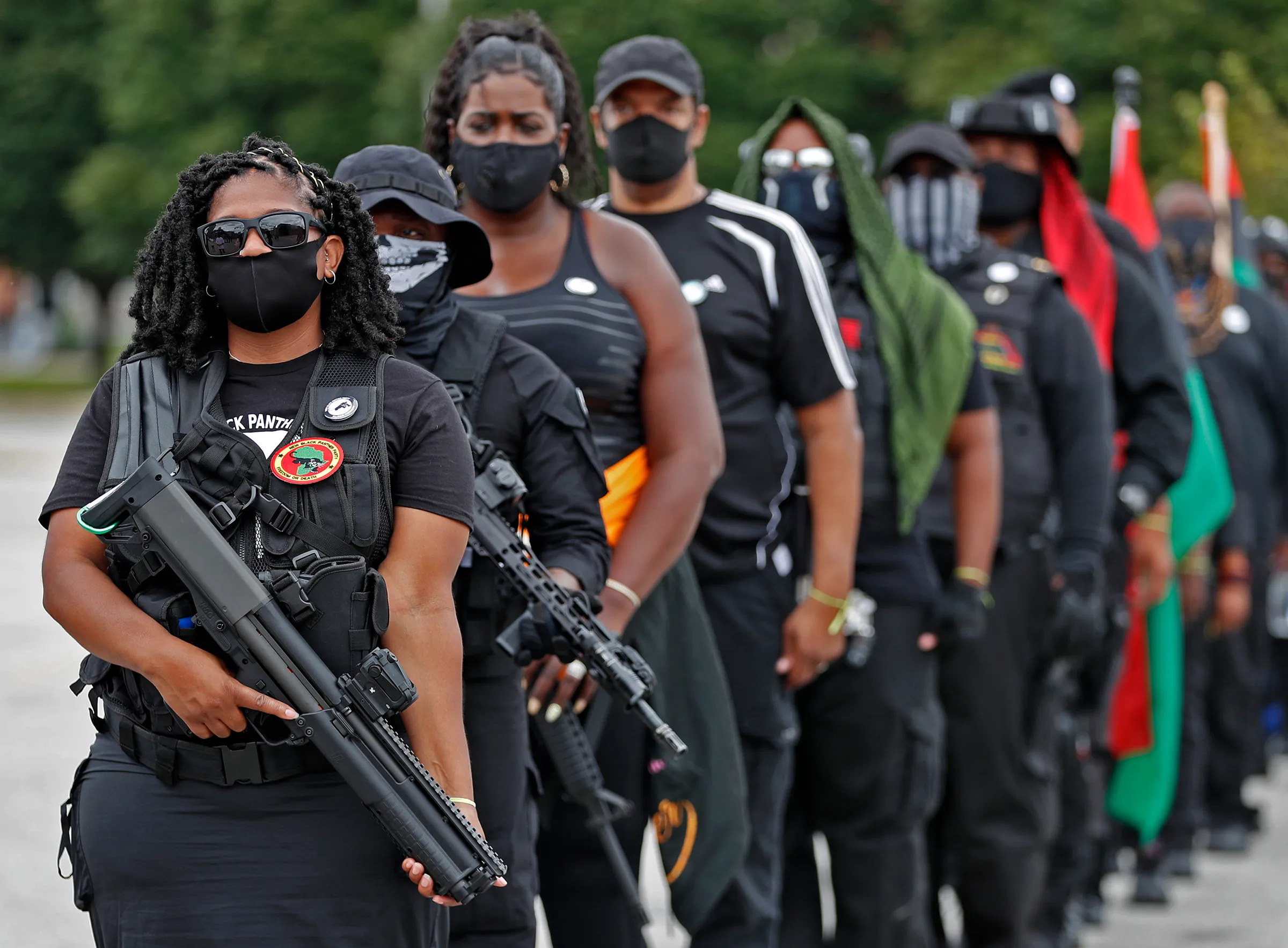

The Black Panther Party claimed they are prepared to defend communities against actions by U.S. Immigration and Customs Enforcement (ICE). These claims, widely shared on social media, have drawn strong reactions. There’s praise from supporters, criticism from opponents, and questions from the public about legality, history, and intent.
According to a statement shared in videos and interviews by a modern Black Panther–affiliated group, they asserted that they would stand between ICE agents and individuals. They believe they are being targeted unfairly during immigration enforcement operations.
While the statements have not been formally endorsed by a national organization. The language echoes a long-standing philosophy rooted in Black Panther ideology: community self-defense against what members view as state overreach.
Historical Roots of the Black Panther Party
The original Black Panther Party was founded in 1966 by Huey P. Newton and Bobby Seale in Oakland, California. The group emerged in response to police brutality and systemic inequality, advocating armed self-defense while also running extensive community programs.
Contrary to popular portrayals that focus solely on militancy, the Panthers established:
- Free breakfast programs for children
- Community health clinics
- Education and political awareness initiatives
Why ICE Is Central to the Current Debate
ICE, created in 2003, is responsible for enforcing federal immigration laws. In recent years, its operations have become a focal point of controversy. Especially in communities of color where immigration enforcement intersects with broader concerns about racial profiling and civil rights.
Advocacy groups argue that immigration enforcement can fracture families and destabilize neighborhoods. While federal officials maintain that ICE operates within the law.
The Black Panther–linked statements place these tensions squarely back into the national spotlight.
Legal and Political Reality
Legal experts note that interfering with federal law enforcement operations is illegal, regardless of intent. Any group attempting to physically block ICE agents could face serious criminal consequences.