


55 Years After Attica: The Deadliest Prison Uprising in U.S. History — and the Cover-Up That Followed
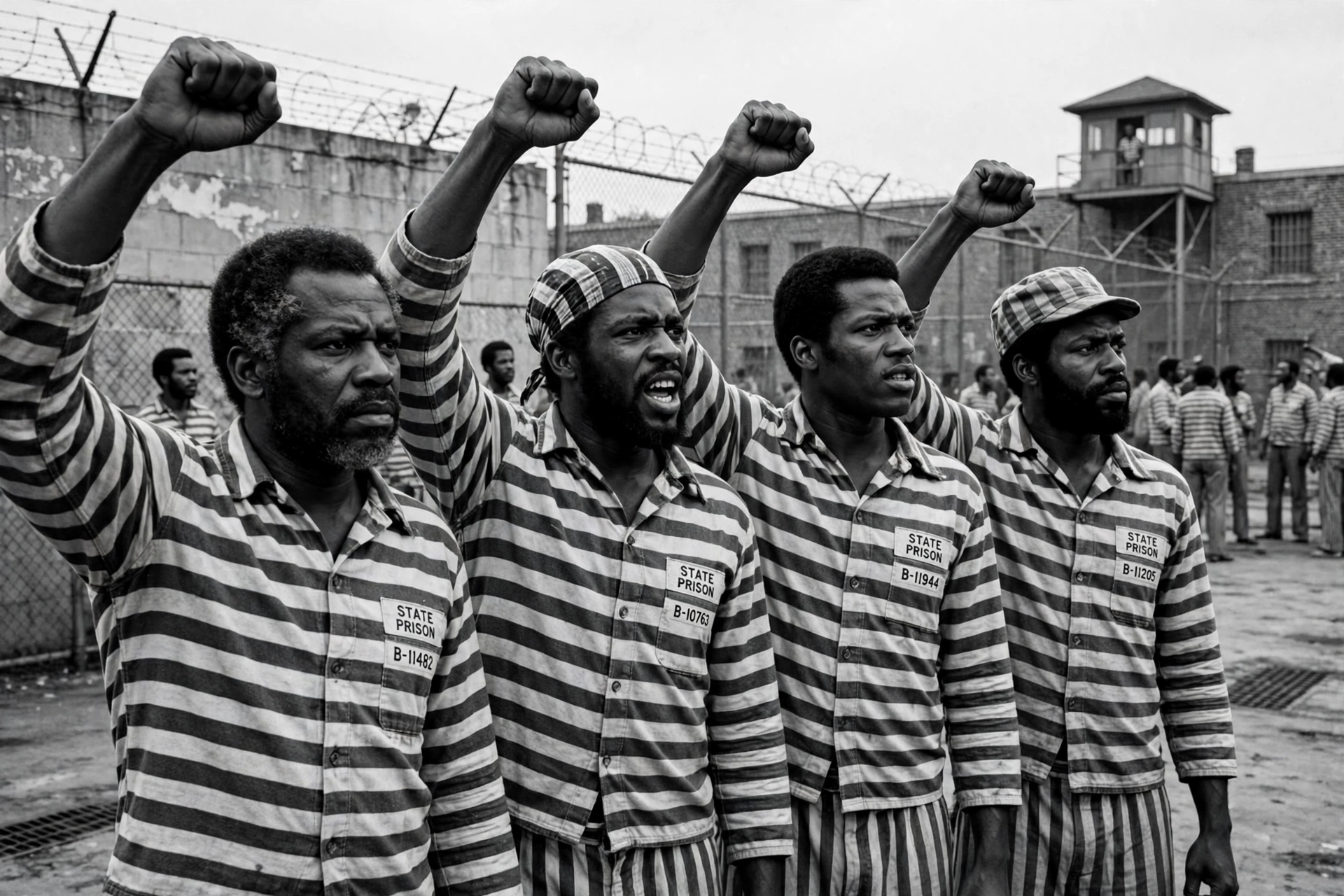
This past September marked 55 years since the Attica prison uprising — four days in 1971 when more than 1,200 incarcerated men seized control of a maximum-security prison in upstate New York and demanded to be treated as human beings. It ended in the bloodiest single day of state violence against Americans since the Civil War. And then the state lied about it.
A powder keg
By 1971, Attica Correctional Facility held about 2,200 men in a prison built for 1,200. Fifty-four percent of the inmates were Black, nine percent Puerto Rican — while nearly all of the 383 guards were white, and some were openly racist. Men got one shower a week, one roll of toilet paper a month, and pennies an hour for prison labor. Mail was censored. Medical care was a rumor.
The spark came from 3,000 miles away. On August 21, 1971, George Jackson — the Black Panther Party prison organizer whose book “Soledad Brother” had made him a symbol — was shot dead by guards at San Quentin under disputed circumstances. When the news reached Attica, the fury was immediate.
On September 9, a scuffle between guards and two inmates boiled over. By day’s end, 1,281 prisoners controlled the cell blocks and the exercise field known as D Yard, holding more than 40 guards and civilian employees hostage.
28 demands
The inmates elected representatives, set up security — Black Muslim inmates, led by Frank “Big Black” Smith, guarded the hostages to keep them safe — and issued a manifesto of 28 demands: better food and medical care, an end to censorship, religious freedom, a minimum wage for prison labor, and an end to the brutal treatment they described as being “treated as beasts.”
Corrections Commissioner Russell Oswald came to negotiate. He agreed to nearly all of the 28 demands. But he refused two things: removing Attica’s warden and granting the inmates complete amnesty from prosecution for the takeover. Without amnesty, the inmates would not surrender the hostages.
Governor Nelson Rockefeller refused to come to Attica — despite pleas from the hostages themselves, the inmates’ representatives, and Oswald. After consulting with President Richard Nixon, Rockefeller ordered the prison retaken by force.
September 13: the assault
On a rainy Monday morning, helicopters dropped tear gas into D Yard and hundreds of state troopers and corrections officers opened fire — some 2,000 to 3,000 rounds in an almost completely indiscriminate barrage. When the shooting stopped, 29 inmates and 10 hostages lay dead. Including those killed earlier in the uprising, 43 people died: 33 inmates and 10 officers and employees.
Then came the lie. State officials announced that the inmates had slit the hostages’ throats — one was even said to have been castrated. The story ran in newspapers nationwide. Autopsies told the truth: every one of the 10 hostages had been killed by law enforcement gunfire. Not a single hostage died at the hands of inmates.
The aftermath
What followed the retaking was nearly as dark. Survivors were stripped, beaten, and tortured — Smith was beaten and forced to play a twisted game of “shotgun roulette.” A state investigation later concluded that “more force was used than was necessary” and that troopers took no precautions to avoid hitting hostages.
The McKay Commission’s 500-page report in 1972 found the uprising grew from long-standing grievances, confirmed the hostages were killed by police gunfire, and criticized Rockefeller for ordering the assault without ever going to Attica. During his 1974 vice-presidential confirmation hearings, Rockefeller admitted a “serious mistake” — though he said his mistake was not retaking the prison sooner.
Sixty-two inmates were charged with over 1,200 criminal counts. No prison or police official was ever brought to trial. It took 29 years of litigation before New York agreed, in January 2000, to a $12 million settlement for the inmates and their families — $8 million to the men, $4 million in legal fees — while admitting no wrongdoing. The hostages’ families received their own $12 million settlement in 2005.
Why Attica still matters
Attica became a watermark in the prisoners’ rights movement — proof, in the words of one commission, of what happens when the state answers a demand for dignity with bullets. The racial math of it has never been in dispute: a mostly Black and brown population, an all-white guard force, and a governor who chose force over negotiation.
Fifty-five years later, with more than two million people behind bars in America, the questions the Attica brothers raised — about who gets treated as human, and what the state is willing to do to maintain control — have not gone away. Neither has the lesson of the cover-up: that the first casualty of state violence is very often the truth.
Sources: Encyclopaedia Britannica; HISTORY; New York State Archives; Encyclopedia.com; Prison Legal News.