

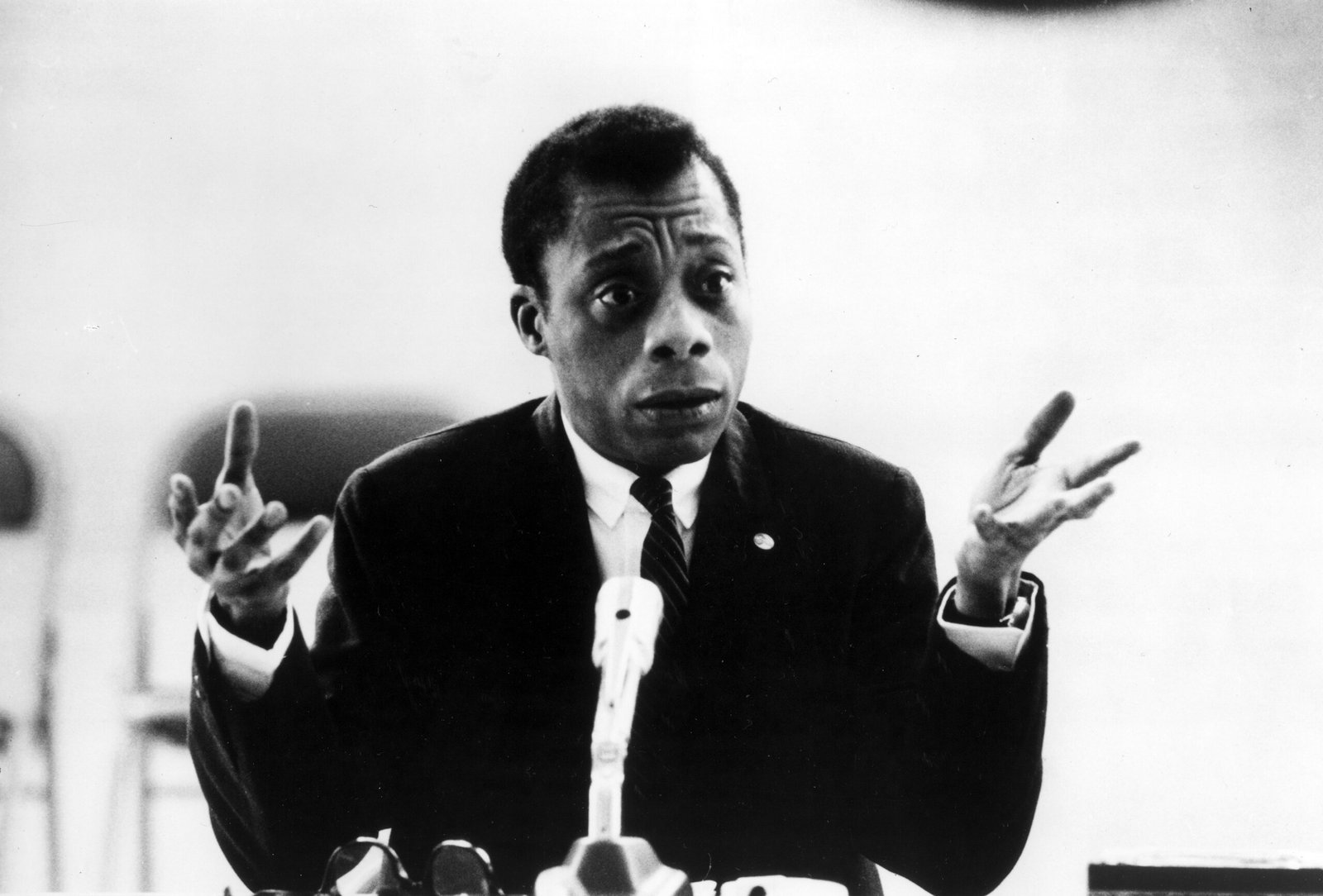

James Baldwin spoke calmly about things America didn’t want to admit. He was born in Harlem in 1924, raised in poverty, surrounded by religion, rage, and expectation. From an early age, Baldwin understood that words carried power — not just to explain the world, but to expose it. Writing became his way out, but it also became his burden. He didn’t write to comfort readers. He wrote to confront them.
Leaving America to Understand It
In his twenties, James Baldwin left the United States for France. Not because he hated his country, but because he needed distance from it. America, he said, made it impossible for him to breathe. From abroad, Baldwin began writing essays and novels that dissected race, identity, sexuality, and power with surgical precision. His work refused simple answers. He didn’t reduce racism to individual hatred — he exposed it as a system woven into the nation itself. Distance gave him clarity. And clarity gave his words weight.
Language as a Form of Resistance
James Baldwin believed language could either liberate or imprison. He chose liberation. His essays spoke directly to white America without flinching, while still centering the emotional and psychological toll racism took on Black people. He challenged the idea that progress meant patience. He challenged the comfort of silence. Baldwin didn’t raise his voice. He sharpened it. That made him dangerous.
The Price of Being Uncomfortable
James Baldwin paid a price for his honesty. He was criticized, misunderstood, and often labeled angry simply for telling the truth. But he refused to dilute his message to make it easier to digest. He believed love and truth were inseparable — and that real love demands accountability. His words still feel current because the questions he asked remain unanswered.
Why His Voice Still Matters
James Baldwin showed that Black art doesn’t always sing, photograph, or perform. Sometimes it stands still and speaks — clearly, deliberately, and without apology. He reminded the world that silence protects injustice. And that telling the truth is not an act of hatred — it’s an act of responsibility. When Black art speaks through language, it leaves no room to hide.