

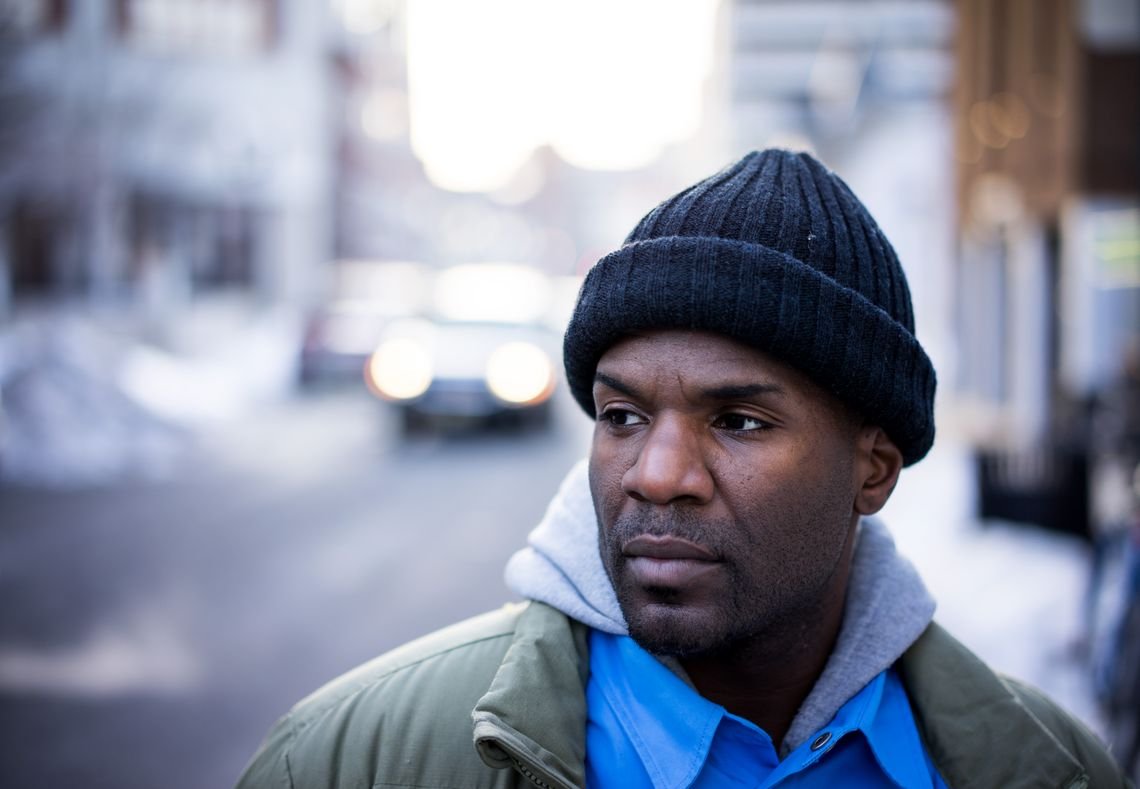

George Williams – On the evening of August 9, 2011, one month before the 40th anniversary of the Attica prison uprising, guards at New York’s most infamous prison beat a 29-year-old Black inmate so badly he could not walk. His name was George Williams. He had four months left on his sentence.
Williams, from New Jersey, was serving two to four years for robbing two Manhattan jewelry stores. He transferred to Attica that January and did his best to stay out of trouble. He planned to go home to New Brunswick and find work as a barber. That night, he sat in his cell watching television and missed the shouting that started it all.
The wrong man
During mail call in C Block, dozens of prisoners were talking loudly. A frustrated guard yelled for them to shut up. From somewhere in the gallery, another prisoner shouted back. Inmates were ordered to lock in.
Thirty minutes later, three officers led by a sergeant stopped at George Williams’ cell. They ordered him to strip for a search and marched him down the hall to a darkened dayroom for what they told him would be a urine test. Williams, 5-foot-8 and 170 pounds, was dwarfed by the men: Sgt. Sean Warner, 5-foot-11 and 240 pounds; Officer Keith Swack, 6-foot-3 and 300 pounds; and Officer Matthew Rademacher, 6 feet and 260 pounds.
Then a fist hammered into George Williams’ rib cage. He collapsed to the floor. Batons, fists, and kicks rained down. Someone jumped on his ankle. He opened his eyes to see a guard winding up to kick him in the head, like punting a football. He thought he was going to die there.
Inmates in cells across from the dayroom watched. Charles Bisesi, 67, saw George Williams pitched face-first onto the floor, kicked in the head and face, and struck with heavy wooden batons. Bisesi estimated George Williams was kicked up to 50 times, with a dozen more nightstick blows delivered with such force he could hear the thud of wood on flesh. Williams’ begging for his life was loud enough that prisoners two floors below heard it.
When one guard rapped his baton on the floor, more guards rushed in. Some witnesses said as many as 12 officers joined the assault. When they finished, Williams could not walk.
The cover-up

After the beating, an officer stepped on a plastic safety razor and pried out the blade. “We got the weapon,” another inmate heard a guard yell.
Handcuffed and unable to walk, George Williams was pulled to the top of a staircase and told to walk down or be pushed. When he said he could not, his ankle broken, he was shoved from behind. He plunged down the stairs and crashed onto his shoulder. Guards picked him up and smashed his face into a wall.
When the detail brought him to solitary confinement, the officer in charge refused to take him. George Williams heard the words: “We can’t take him in here looking like that.” He was sent to the infirmary instead, where a nurse who had worked at Attica for just 10 months judged the force excessive and called the prison doctor, who agreed Williams needed an outside hospital.
They took him first to a hospital in Warsaw, then to Erie County Medical Center in Buffalo, 50 miles away. His injuries: a broken shoulder, several cracked ribs, two broken legs — one requiring surgery with a plate and six screws — a severe fracture of the eye socket, and blood lodged in his sinus. Doctors called it blunt force trauma.
Back at Attica, the official story took shape. An incident memo claimed George Williams had a razor blade and an ice pick-like shaft. A porter was ordered to hurry up and clean up the blood, and warned to keep quiet. Another inmate was ordered to clean blood from the captain’s office and carry a bag of bloody shirts to a barbecue pit, where officials later concluded they were burned.
The inmate witnesses told investigators something else: if the guards were looking to punish the prisoner who had shouted back that night, they had grabbed the wrong man.
The “justice”
On December 13, 2011, Warner, Rademacher, Swack, and a fourth guard, Erik Hibsch, were charged with first-degree gang assault, falsifying reports, and tampering with evidence. It was the first time gang assault charges had ever been brought against guards for beating a prisoner.
But the case ended in March 2015 with a plea deal. Warner, Rademacher, and Swack pleaded guilty to misdemeanor official misconduct, resigned, and received a one-year conditional discharge. No jail time. They kept their pensions. Hibsch was granted immunity for testifying against his coworkers. It was the first time in New York history that a guard had pleaded guilty to an unauthorized violent act against a prisoner on duty — and the punishment was a misdemeanor.
Williams called the outcome “crazy,” though he said he was glad the guards had lost their jobs. His attorney called their actions “malicious and sadistic.”
The civil cases went further. Williams filed a federal civil rights suit, which later settled. In a 2019 Court of Claims trial, decided October 13, 2020, the court held the State of New York 100 percent liable for Williams’ injuries.
One small act of grace changed everything. Don Huber, an Army specialist who grew up in Attica, heard about the beating and started a fundraiser to help Williams pursue his dream of barber school. It collected $5,800. Williams said it was almost unimaginable — he never thought people would care.
The pattern
George Williams’ beating was not an aberration at Attica. According to the Marshall Project, there were 228 alleged assaults by staff at the prison between January 2010 and November 2013. Attica held more than 2,200 prisoners, mostly Black and Hispanic men from New York City, guarded almost entirely by white officers from rural Wyoming County. It was only in 2015, when Attica installed surveillance cameras throughout the prison, that assault filings dropped by 80 percent.
That is the throughline from 1971 to 2011. Forty years after the uprising that left 43 people dead — an uprising sparked by the same brutal conditions — the prison’s name still meant the same thing. George Williams survived his beating. The guards who beat him kept their pensions. And the only reason anyone knows his name is that, for once, the cover-up failed.
Sources
- Prison Legal News, “Attica Prison Guards Who Viciously Beat Prisoner Avoid Jail Time but Lose Jobs”
- The New York Times via Portside, “A Brutal Beating Wakes Attica’s Ghosts”
- Williams v. State (Court of Claims, 2020) summary