

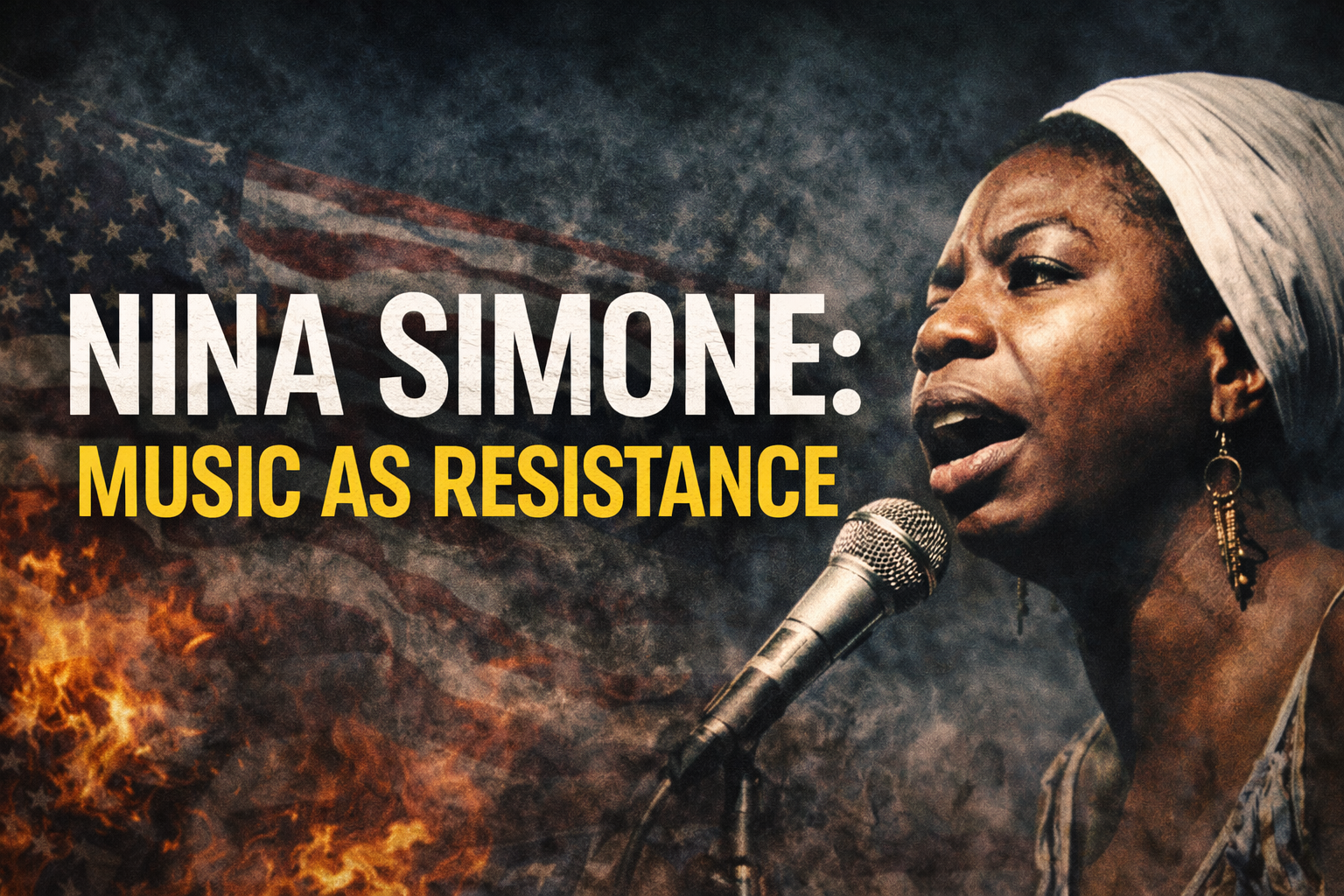

Nina Simone was never just an artist — she was a force. Born Eunice Kathleen Waymon in 1933, Simone was classically trained as a pianist and originally aspired to be the first Black classical concert pianist. When racism blocked her path, she redirected her brilliance into jazz, blues, soul, and folk — and changed music forever.
But what truly separated Nina Simone was her refusal to separate art from resistance.
Songs like “Mississippi Goddam,” “Four Women,” and “To Be Young, Gifted and Black” weren’t made for comfort. They were made for truth. At a time when many entertainers avoided politics to protect careers, Simone confronted racism, violence, and Black pain head-on — often at great personal cost.
She once said:
“An artist’s duty is to reflect the times.”
And she did — unapologetically.
Because of her activism, Simone was:
- Blacklisted by radio stations
- Monitored by government agencies
- Pushed into exile later in life
Yet her influence only grew. Today, her music is sampled, studied, and rediscovered by new generations who recognize what she always knew: Black art has power when it refuses to be silent.