

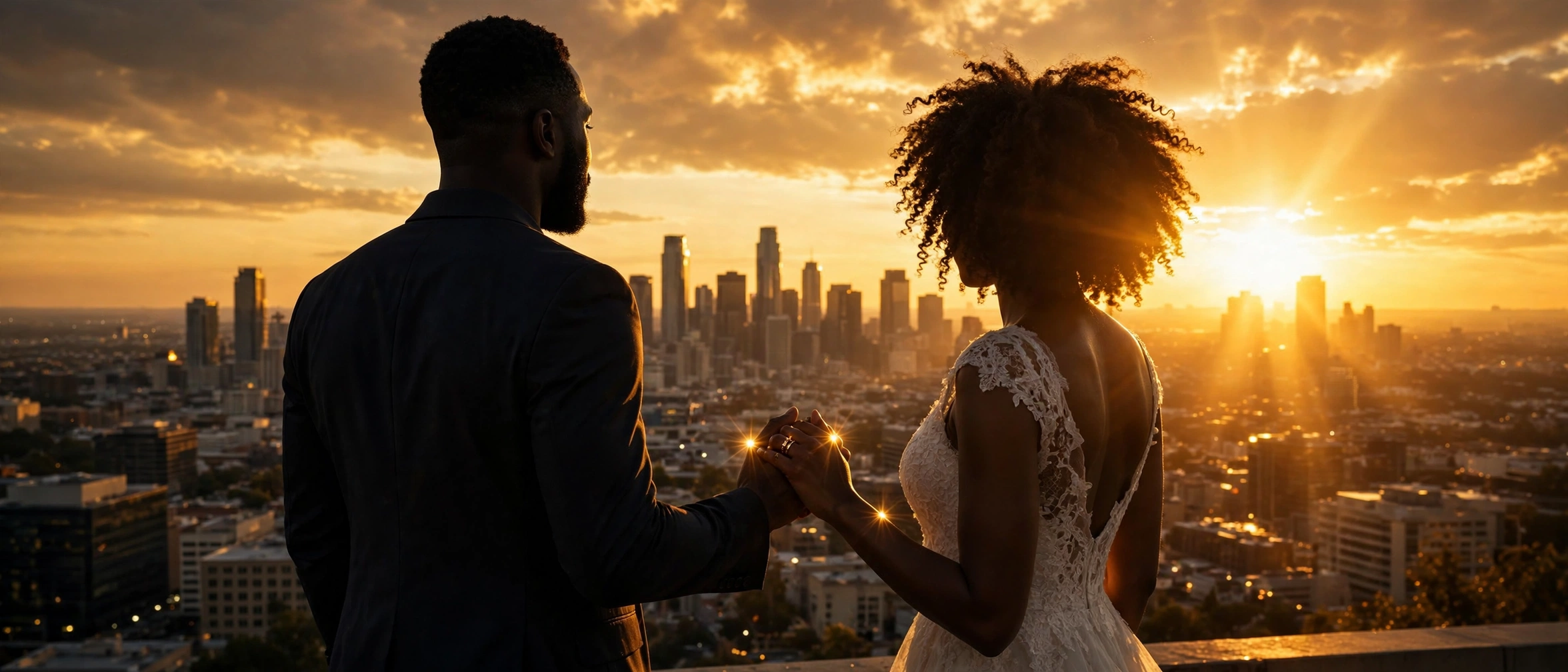

The black marriage rate is at a historic low — and the numbers tell a sobering story.
Are more or fewer Black people getting married today? It’s a question that comes up at every family gathering, in every barbershop debate, all over social media. The data has an answer — and it’s not the one romantics want to hear.
The black marriage rate in numbers
Black Americans now have the lowest marriage rates of any racial group in the country. About 38 percent of Black men and 33 percent of Black women are currently married, according to Census Bureau data compiled through 2024. Compare that to 58 percent of all women in America who are married — and the gap is stark.
The picture is sharpest among the young. Black men under 35 see just 38 marriages per 1,000 single men. Black women in the same age range: 35.5 per 1,000. Those are the lowest rates for any group at any age measured.
A broader American decline
This isn’t only a Black story — it’s an American one playing out hardest in our community. In 1975, two-thirds of U.S. households were married couples. As of 2025, that figure is down to 47 percent. Single adulthood has become the norm, not the exception, and marriage keeps sliding down the priority list for every demographic.
But while every group has seen marriage decline since 1990, the drop has been steepest for Black Americans, who started from a lower baseline and fell further.
Why the gap exists
Researchers point to a tangle of causes, not a single villain. Economics leads the list: Black households carry lower median wealth and income, and financial instability is one of the strongest predictors of delayed or forgone marriage across all races. The gender income gap is also smallest among Black Americans — Black women out-earn their male counterparts more often than in any other group — which scrambles the traditional “male provider” script marriage was built around.
Then there’s incarceration. Black men are locked up at roughly five times the rate of white men, removing millions from the marriage pool during prime marrying years and destabilizing the communities they return to. Add the everyday frictions researchers document — from dating-app racism to plain mate scarcity in segregated neighborhoods — and the math gets brutal.
None of this means Black people value commitment less. It means the conditions that make marriage easy — money, stability, available partners — are distributed unequally.
The black marriage rate also reflects a simple timing problem. Americans of every background are marrying later — the median age of first marriage keeps climbing — but Black Americans face the steepest version of that delay. When wages are lower, debt is higher, and whole neighborhoods carry the aftershocks of mass incarceration, “waiting until we’re stable” can stretch into never. Researchers call this the marriageability gap: it’s not that people stopped believing in marriage, it’s that the economic foundation marriage was built on keeps moving further out of reach.
One trend moving the other way
There is one marriage trend climbing: intermarriage. About 18 percent of Black newlyweds now marry someone of a different race or ethnicity, up from just 5 percent in 1980. For those who do marry, love is increasingly crossing the lines that once defined it.
The bottom line
Fewer Black Americans are getting married — the lowest rate in the nation, and still falling. The reasons are structural more than cultural: money, mass incarceration, and a dating landscape tilted against us. Until those conditions change, the numbers probably won’t either. But numbers describe the past. What we build next is still up to us.
For another look at how policy hits Black families, read our story on the new food stamp reforms.