

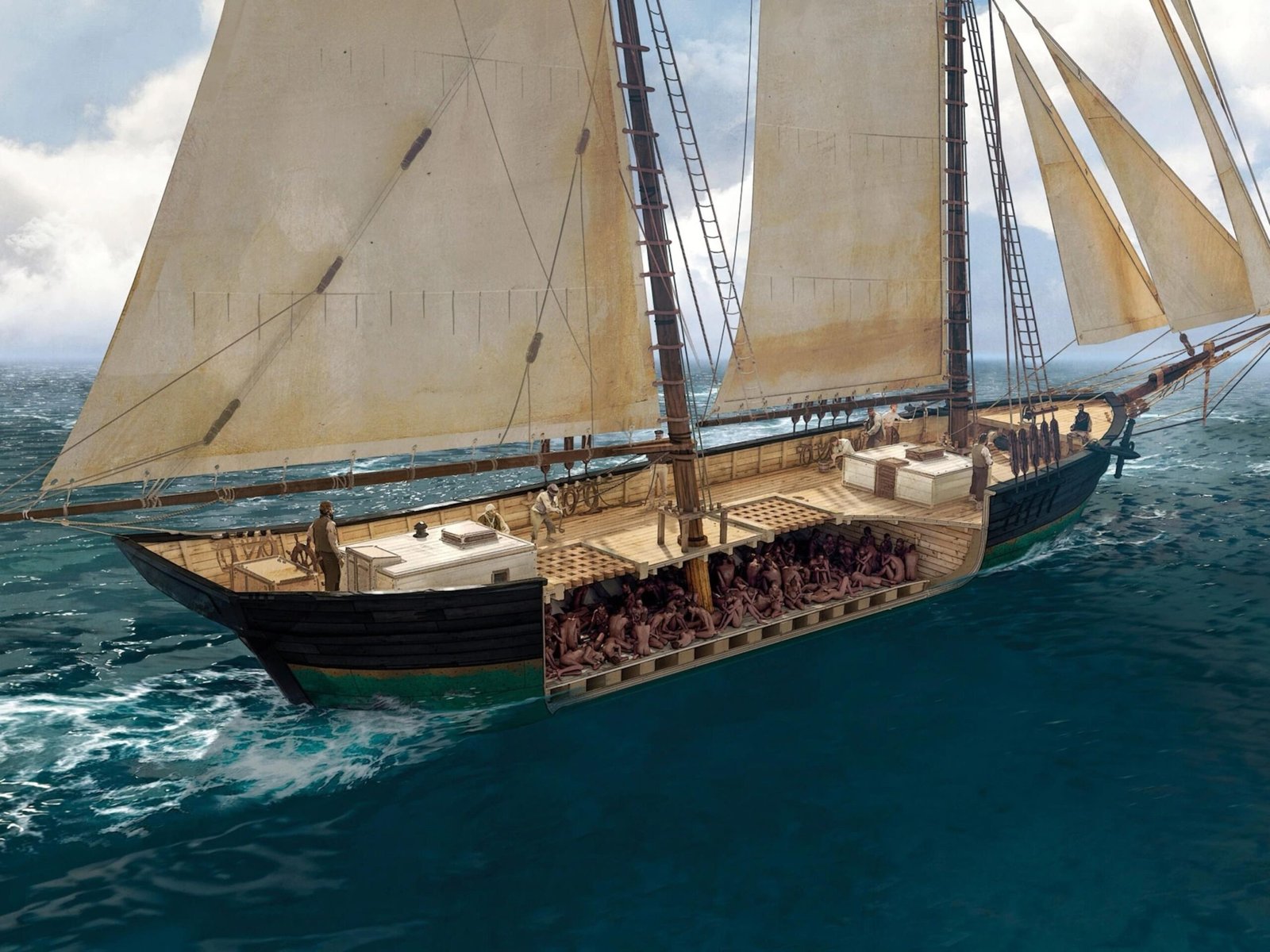

The Last Slave Ship arrived in America in 1860, more than 50 years after the United States banned the international slave trade. The ship carried more than 100 Africans to Alabama, and their story would eventually lead to the creation of one of the most remarkable Black communities in American history.
While many Americans believe the slave trade ended when it was outlawed in 1808, the reality is that illegal slave voyages continued for decades. In 1860, a group of wealthy businessmen in Alabama reportedly financed a secret mission to bring enslaved Africans into the United States despite federal law prohibiting it.
The vessel used for the operation was the Clotilda, now recognized as the last known slave ship to bring Africans to America.
The Voyage of the Clotilda
The Clotilda sailed to West Africa, where approximately 110 men, women, and children were captured and forced aboard the ship. They endured a brutal journey across the Atlantic before arriving near Mobile, Alabama.
Those responsible knew they had committed a crime. To hide the evidence, the ship was burned and sunk after the captives were unloaded.
For decades, the story of the Clotilda survived through the memories of the people who had been forced aboard the vessel. Many historians believed the ship would never be found.
Freedom Comes Five Years Later
Just five years after the Clotilda arrived, the Civil War ended, and slavery was abolished in the United States.
The survivors were finally free, but freedom brought new challenges. Many dreamed of returning to Africa, but they lacked the financial resources needed to make the journey.
Rather than give up hope, they chose to build a future where they were.
The former captives pooled their money, purchased land north of Mobile, and began creating a community of their own.
The Birth of Africatown
The settlement became known as Africatown.
Unlike many communities formed during that era, Africatown was established by people who shared a direct connection to Africa and a common experience aboard the last slave ship.
Residents built homes, churches, schools, and businesses. They worked to preserve their language, customs, and traditions while creating opportunities for future generations.
Africatown became a symbol of resilience and determination. Despite being brought to America against their will, its founders refused to allow their culture and identity to disappear.
Keeping History Alive
One of the most well-known survivors was Cudjo Lewis, who lived long enough to tell his story to researchers and writers.
His firsthand account provided valuable insight into life in Africa, the horrors of the slave trade, and the experience of building a new life after emancipation.
Those stories helped preserve an important chapter of American history that might otherwise have been lost.
The Discovery of the Shipwreck
For generations, the exact location of the Clotilda remained a mystery.
That changed in 2019 when researchers confirmed the discovery of the shipwreck in Alabama waters.
The finding provided physical evidence of the last slave ship and brought renewed attention to Africatown and the descendants of those who survived the voyage.
Today, the discovery continues to attract historians, researchers, and visitors interested in learning more about this powerful story.
A Legacy That Endures
The story of the last slave ship is about more than slavery. It is also a story about perseverance, community, and the determination to overcome unimaginable circumstances.
The men and women who arrived aboard the Clotilda could have been remembered only as victims. Instead, they became founders, landowners, parents, and community leaders.
Their efforts transformed tragedy into a lasting legacy.
More than 160 years later, Africatown remains a testament to the strength of those who survived the last