

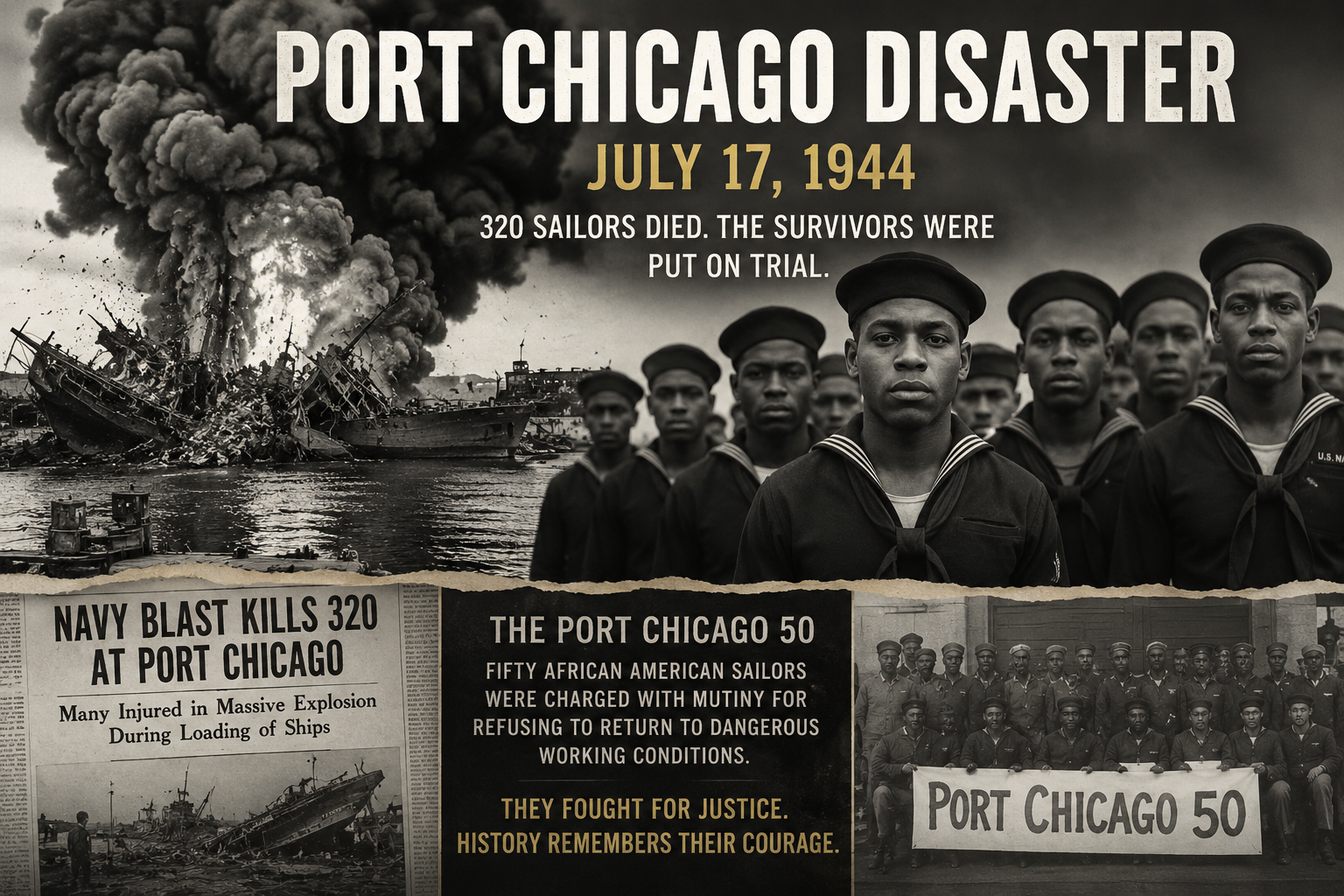

Port Chicago – When people think about World War II, they often remember the bravery of soldiers fighting overseas. However, one of the deadliest tragedies to occur on American soil during the war remains largely unknown: the Port Chicago Disaster.
On July 17, 1944, a massive explosion rocked the Port Chicago Naval Magazine in California. The facility served as a major ammunition loading station for the U.S. Navy during World War II. Sailors were loading bombs, shells, and other explosives onto cargo ships bound for the Pacific theater when disaster struck.
The explosion was so powerful that it registered as a small earthquake. Two ships were completely destroyed, nearby buildings were leveled, and 320 men lost their lives. More than 390 others were injured.
Most of the victims were African American sailors.
A Segregated Navy
At the time, the U.S. military was still segregated. Black sailors were often assigned to dangerous labor duties while white officers supervised. Many of the sailors at Port Chicago had received little training in handling explosives and were pressured to load ammunition quickly.
Survivors later described unsafe working conditions and a lack of proper safety procedures.
The tragedy raised serious questions about whether the deaths could have been prevented.
Refusing to Return
In the weeks following the explosion, surviving sailors were ordered back to loading ammunition at another naval facility.
Many refused.
The men argued that the Navy had failed to address the dangerous conditions that led to the disaster. They were willing to work, but they did not want to return to loading ammunition under the same circumstances.
The Navy viewed their refusal differently.
The Port Chicago 50
A total of 258 sailors were disciplined for refusing orders. Fifty of them were charged with mutiny, one of the most serious offenses in the military.
The group became known as the Port Chicago 50.
The trial attracted national attention and raised concerns about racial discrimination within the military. Future Supreme Court Justice Thurgood Marshall attended portions of the proceedings and questioned whether the sailors were being treated fairly.
When people think about World War II, they often remember the bravery of soldiers fighting overseas. However, one of the deadliest tragedies to occur on American soil during the war remains largely unknown: the Port Chicago Disaster.
On July 17, 1944, a massive explosion rocked the Port Chicago Naval Magazine in California. The facility served as a major ammunition loading station for the U.S. Navy during World War II. Sailors were loading bombs, shells, and other explosives onto cargo ships bound for the Pacific theater when disaster struck.
The explosion was so powerful that it registered as a small earthquake. Two ships were completely destroyed, nearby buildings were leveled, and 320 men lost their lives. More than 390 others were injured.
Most of the victims were African American sailors.
A Segregated Navy
At the time, the U.S. military was still segregated. Black sailors were often assigned to dangerous labor duties while white officers supervised. Many of the sailors at Port Chicago had received little training in handling explosives and were pressured to load ammunition quickly.
Survivors later described unsafe working conditions and a lack of proper safety procedures.
The tragedy raised serious questions about whether the deaths could have been prevented.
Refusing to Return
In the weeks following the explosion, surviving sailors were ordered back to loading ammunition at another naval facility.
Many refused.
The men argued that the Navy had failed to address the dangerous conditions that led to the disaster. They were willing to work, but they did not want to return to loading ammunition under the same circumstances.
The Navy viewed their refusal differently.
The Port Chicago 50
A total of 258 sailors were disciplined for refusing orders. Fifty of them were charged with mutiny, one of the most serious offenses in the military.
The group became known as the Port Chicago 50.
The trial attracted national attention and raised concerns about racial discrimination within the military. Future Supreme Court Justice Thurgood Marshall attended portions of the proceedings and questioned whether the sailors were being treated fairly.
Despite widespread criticism, all 50 men were convicted and sentenced to prison.
A Long Fight for Justice
For decades, historians, civil rights activists, and family members argued that the sailors had been unfairly punished. Many believed the men were standing up for their safety rather than committing mutiny.
The Port Chicago case became an important chapter in the struggle for civil rights and helped expose racial inequalities within the armed forces.
In the years that followed, the U.S. military moved toward desegregation, and the story of Port Chicago became a symbol of both sacrifice and injustice.
Finally Recognized
Eighty years after the disaster, the U.S. Navy officially exonerated the sailors who had been punished following the explosion, acknowledging that serious mistakes had been made in the handling of their cases.
For many families, the decision brought long-overdue recognition and closure.