

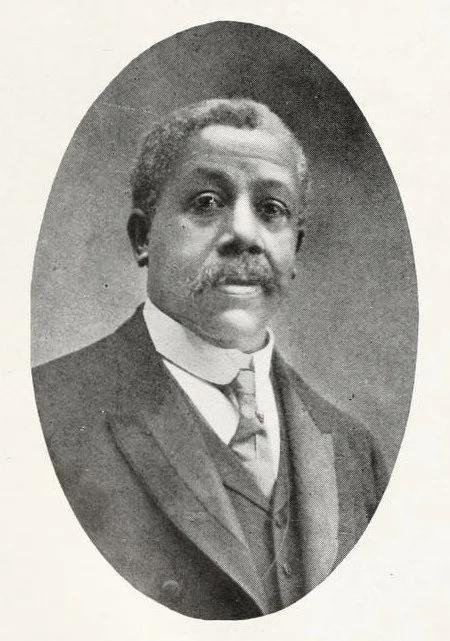

Edward Bouchet: In 1876, a young man from New Haven, Connecticut, made history in a way that should have changed the world.
His name was Edward Alexander Bouchet, and he became the first African American to earn a Ph.D. in the United States, receiving his degree in physics from Yale University.
At a time when most Black Americans were denied even basic education, Bouchet achieved something almost unimaginable.
Yet today, his name is rarely mentioned.
From New Haven to Historic Achievement
Born in 1852 in New Haven, Bouchet was the son of a formerly enslaved father. From an early age, his intelligence stood out.
He graduated at the top of his class in high school and went on to attend Yale University, where he excelled in one of the most challenging academic fields—physics.
In 1876, he earned his doctorate, becoming:
- The first African American Ph.D. recipient in U.S. history
- One of the first six people in America to earn a Ph.D. in physics
This was not just a personal achievement—it was a historic breakthrough in American education.
Excellence Without Opportunity

Despite his credentials, Bouchet was denied teaching and research positions at white universities due to racial discrimination.
Instead of working in research labs or universities, he spent much of his career teaching at the Institute for Colored Youth, now known as Cheyney University.
While he became an influential educator, the reality remains:
America limited a brilliant scientific mind at its peak.
The Cost of Being First
Edward Bouchet’s story highlights a difficult truth in American history.
Being the first often means:
- Breaking barriers without recognition
- Achieving greatness without equal opportunity
- Opening doors that others will benefit from later
His life raises an important question:
How many brilliant minds were never given the chance to reach their full potential?
Why Edward Bouchet Still Matters Today
The legacy of Edward Bouchet is more relevant than ever.
His story reminds us that:
- Talent exists in every community
- Access to opportunity has not always been equal
- Progress requires both recognition and action
As conversations around education, equality, and opportunity continue, Bouchet’s life stands as both an inspiration and a warning.
A Legacy Rooted in New Haven
For residents of Connecticut, Bouchet’s story carries even deeper meaning.
He was not a distant figure from another place or time—he was from New Haven.
He walked the same streets, studied in the same city, and overcame barriers that once defined the region.
His story is not just Black history.
It is Connecticut history. American history.
Final Thoughts
Edward Bouchet proved that brilliance does not need permission to exist.
But his life also shows that recognition—and opportunity—are not always given equally.
More than a century later, his story still challenges us to do better.
Call to Action (BPN Style)
At Black Perspective News, we highlight the stories that history overlooked. Follow us for more powerful insights into Black history, culture, and excellence that continue to shape our world.