

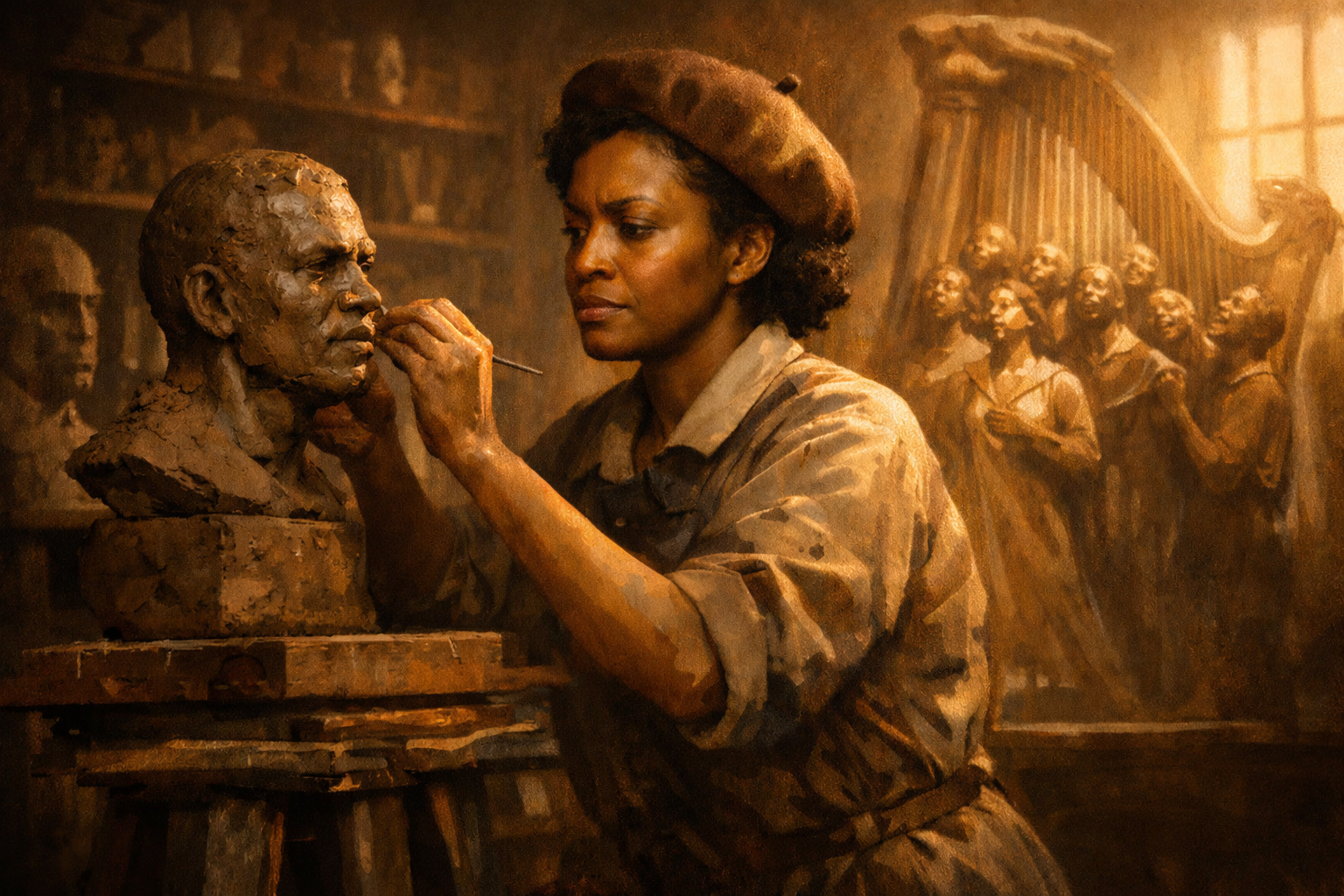

Augusta Savage was born into that world — and still carved her name into history. Born in 1892 in Green Cove Springs, Florida, Savage showed artistic ability as a child. Clay was her first canvas. But encouragement did not come easily. Her father, a strict Methodist minister, initially discouraged her from pursuing art, believing sculpture was sinful. Poverty tried to limit her. Racism tried to confine her. Sexism tried to silence her.
From Florida to the Harlem Renaissance
Savage eventually moved to New York City, where she became a central figure of the Harlem Renaissance — a period when Black writers, musicians, and artists reshaped American culture.
She studied at Cooper Union and later won a scholarship to study in Paris. However, racism followed her even there; a French summer program rejected her solely because she was Black. Instead of quitting, she turned the insult into fuel.When she returned to Harlem, she did more than sculpt. She built.
The Teacher Who Created Opportunity
She founded the Savage Studio of Arts and Crafts in Harlem, mentoring young Black artists who were denied entry into mainstream institutions. Among her students were rising talents who would later define American art. At a time when funding for Black art was scarce, she became the first Black woman to direct a federally funded art center during the New Deal era. She wasn’t just creating sculptures. She was shaping a generation.
“The Harp” — A Masterpiece Lost
In 1939, Savage created one of her most famous works, “The Harp,” for the New York World’s Fair. The sculpture featured twelve Black singers arranged as the strings of a harp, inspired by the hymn “Lift Every Voice and Sing.” It was monumental. Majestic. A symbol of resilience.
But after the fair ended, the sculpture was destroyed. There were no funds to cast it in bronze. No major institution stepped in to preserve it. A masterpiece disappeared. Yet her legacy did not.