

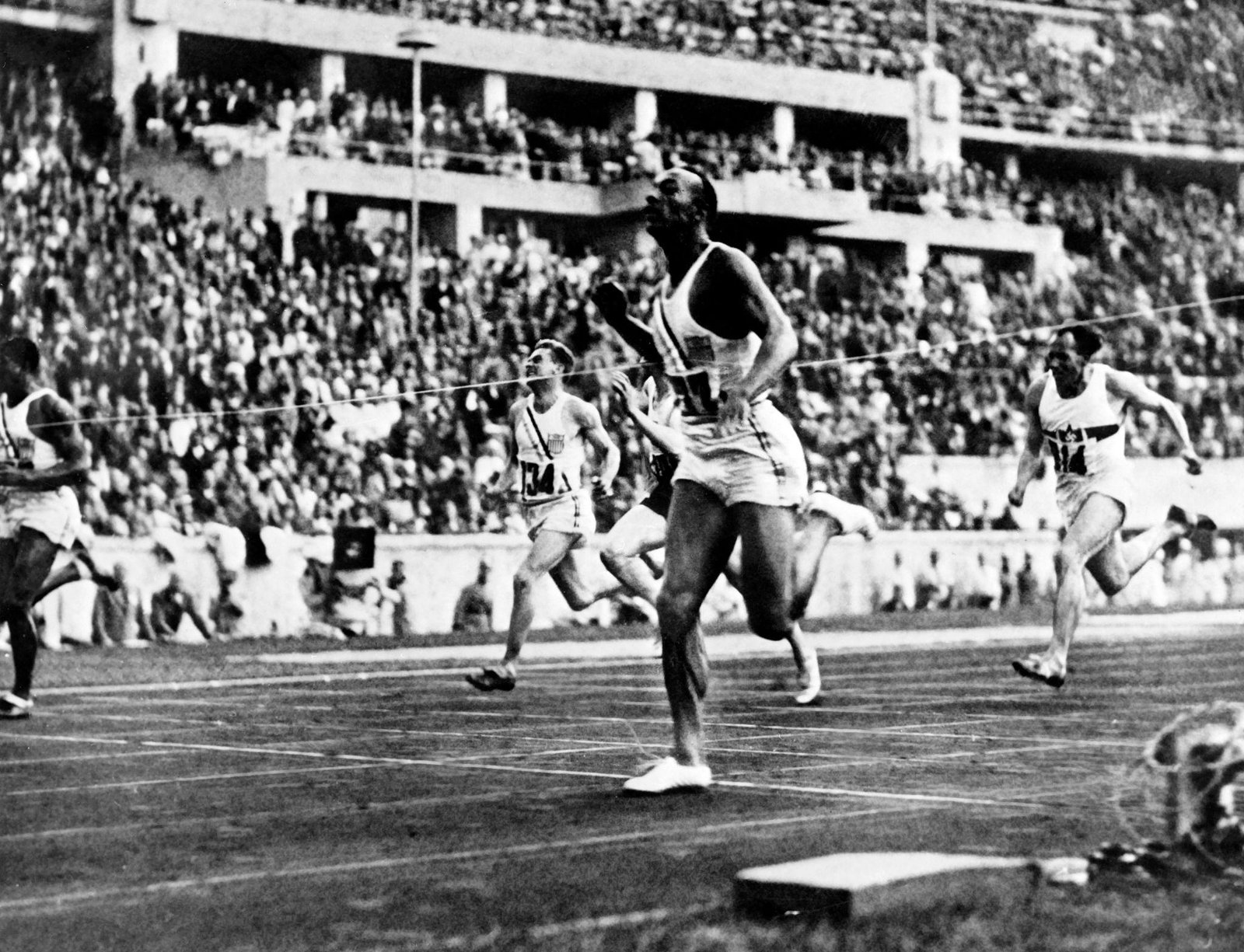

In 1936, on the biggest stage imaginable, Jesse Owens became the most dominant athlete on Earth. Four gold medals. World records. A global spotlight that should have guaranteed respect, security, and opportunity. However, America gave him none of that.
A Young Man Running Against More Than Time
Jesse Owens was born in 1913 in Oakville, Alabama, the grandson of enslaved people. His family later moved north during the Great Migration, settling in Cleveland, Ohio, in search of opportunity, like millions of Black families at the time.
Track revealed his talent early. By the time Owens reached Ohio State University, his speed was undeniable. In 1935, on a historic afternoon, he set a world record and broke three others—all within 45 minutes. Yet even as records fell, barriers stayed firmly in place.
Owens could run for the university, but he couldn’t live on campus with white teammates. Restaurants near school often refused to serve him. Fame didn’t remove segregation—it only followed him through it.
Berlin, 1936
The Berlin Olympics were designed as a propaganda showcase for Nazi Germany. Adolf Hitler wanted the games to demonstrate so-called Aryan superiority.
Jesse Owens ruined that narrative completely. He won Gold in the 100 meters, 200 meters, long jump, and 4×100 relay. Owens didn’t just win. He dominated.
International crowds celebrated him. German spectators cheered his victories. The world watched a Black American athlete dismantle racist ideology in real time. Back home, the myth took hold that Owens had struck a blow against hatred everywhere.
No Parade, No Recognition
After returning to the United States, Jesse Owens was not invited to the White House. President Franklin D. Roosevelt never congratulated him publicly. No national ceremony. He never received a meaningful endorsement deal. No long-term financial support. To survive, Owens raced against horses, ran exhibition events, and took promotional jobs that barely reflected his status as a global icon.
A Lifetime of Quiet Resilience
Owens never framed himself as a victim. He spoke carefully, often diplomatically, navigating a country that celebrated his achievements without confronting its contradictions.
Later in life, he worked as a goodwill ambassador and motivational speaker. Recognition eventually came—decades late—but the damage of early neglect couldn’t be undone.