

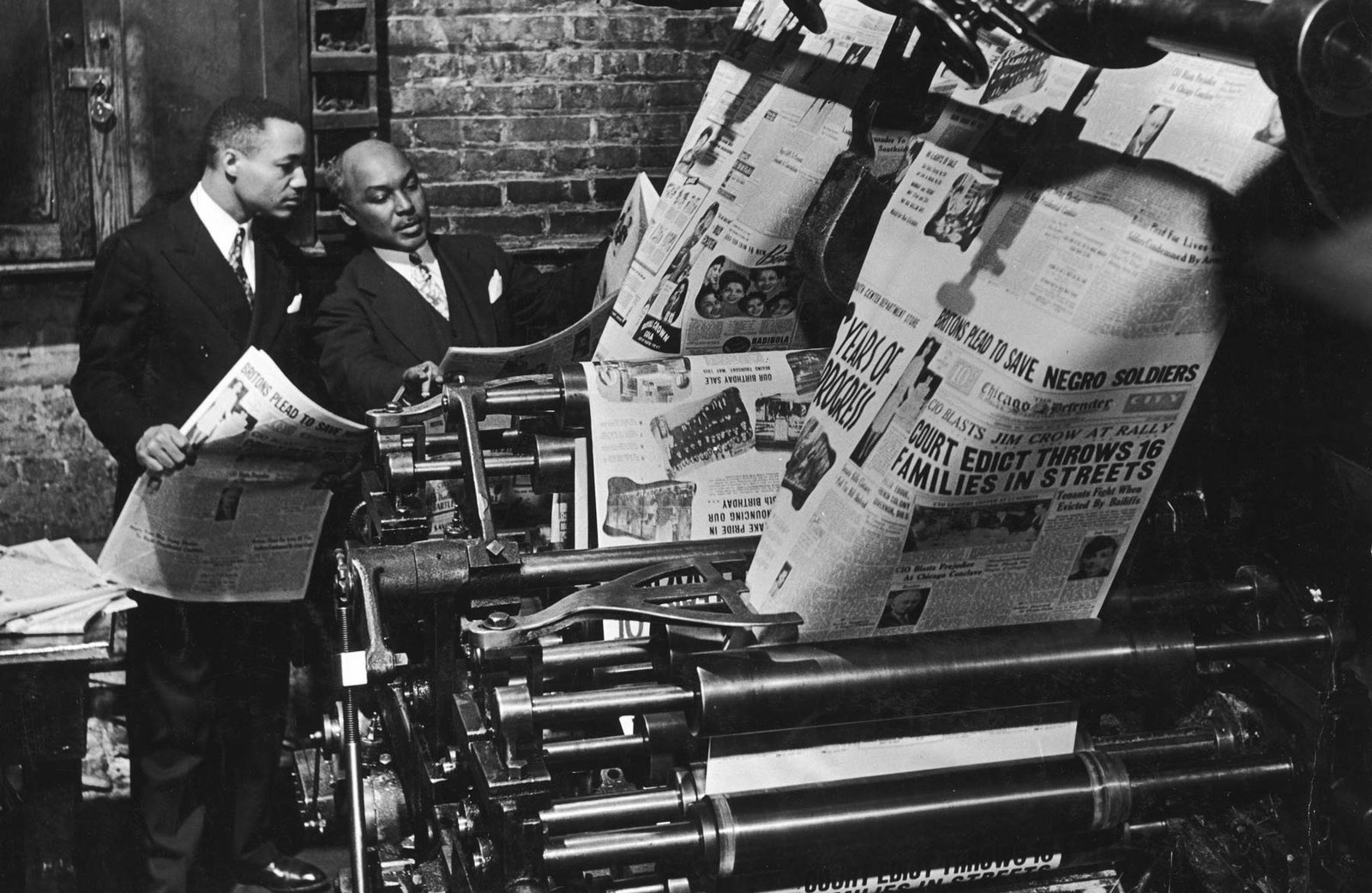

Black journalism – In an America where mainstream newspapers ignored Black communities—or distorted them beyond recognition—Black journalists stepped into a role that went far beyond reporting. They became record keepers, witnesses, and protectors of truth. When stories were erased, they preserved them.

Mainstream outlets frequently portrayed Black life through stereotypes or silence. Lynchings were dismissed as “incidents.” Discrimination was framed as a coincidence. Entire communities were treated as invisible. Black journalists refused to accept that narrative.
Publications such as the Chicago Defender, the Pittsburgh Courier, and the Baltimore Afro-American were not just newspapers. They were lifelines. Families relied on them to learn which towns were unsafe, where jobs were available, and how laws were being enforced—or ignored. A single paper often passed through multiple households, churches, and barbershops, spreading information long after the ink dried.
Black journalists also challenged power in ways others would not. They criticized presidents, exposed local corruption, and questioned policies that harmed Black Americans. This accountability came with consequences. Writers faced harassment, surveillance, threats, and financial pressure. Some paid with their freedom. Others paid with their lives. Still, the work continued.
What made Black journalism distinct was not just what it reported, but why it reported it. The goal was never approval.
Today, the impact of that work is undeniable. Much of what we know about Black history exists because Black journalists chose truth over safety and responsibility over recognition. Their reporting filled gaps left by institutions that failed to serve everyone equally.
Black journalism did not wait for validation to matter. It mattered because it told the truth when silence would have been easier.