

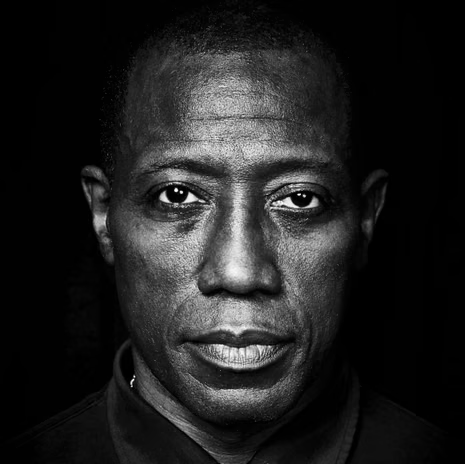

Wesley Snipes was born Wesley Trent Snipes on July 31, 1962, in Orlando, Florida, and raised in the Bronx, New York. Growing up in a working-class environment, Snipes was exposed early to discipline, structure, and the realities of urban life — influences that would later shape both his intensity on screen and his approach to personal responsibility.
Finding Acting Through Discipline
Before Hollywood recognition, Snipes trained seriously in the arts. He studied at the High School of Performing Arts in New York City and later attended the State University of New York at Purchase. Acting was not a shortcut for him — it was a craft that demanded control, preparation, and consistency.
Breaking Into Hollywood
Snipes entered film and television in the late 1980s, quickly standing out for his physical presence and sharp delivery. Early roles showed range, but it was clear he brought something different — a blend of athleticism, intelligence, and quiet intensity that didn’t rely on stereotypes.
Becoming a Box Office Force
By the 1990s, Wesley Snipes was one of the most visible Black actors in Hollywood. Films like New Jack City, White Men Can’t Jump, and later the Blade trilogy positioned him as both a dramatic lead and an action star. At a time when few Black actors were allowed to carry major franchises, Snipes did it without dilution or apology.
The Fall and Legal Consequences
At the height of his success, Snipes’ career was interrupted by serious legal trouble. In 2008, he was convicted of federal misdemeanor charges related to failure to file tax returns and was later sentenced to prison. The case became a public cautionary tale — not of celebrity excess, but of financial mismanagement and poor counsel.
Unlike many public figures, Snipes did not deny responsibility once the legal process concluded. He served his sentence and returned quietly, without public excuses or attempts to rewrite the narrative.
Life After Prison: Rebuilding Without Noise
Following his release, Wesley Snipes did not rush back into the spotlight. He took a measured approach — selecting roles carefully, spending time mentoring younger creatives, and speaking openly about the importance of financial literacy and personal accountability.
Rather than framing himself as a victim, Snipes consistently emphasized lessons learned. His focus shifted from dominance to sustainability — a rare transition in an industry that rewards denial over growth.
A Different Kind of Legacy
Snipes’ post-prison career is not defined by volume, but by intention. His return to acting has been selective, and his public presence has been more grounded. What once was driven by ambition is now guided by clarity.
That evolution matters.
Why Wesley Snipes’ Story Still Matters
Wesley Snipes represents a version of redemption that doesn’t come with applause. There was no comeback tour. No dramatic rebranding. Just accountability, adjustment, and forward motion.
In a culture that often erases people after their lowest moments, his story reminds us that growth doesn’t require permission — only responsibility.
This isn’t a story about falling from grace. It’s a story about what you do after the fall.