

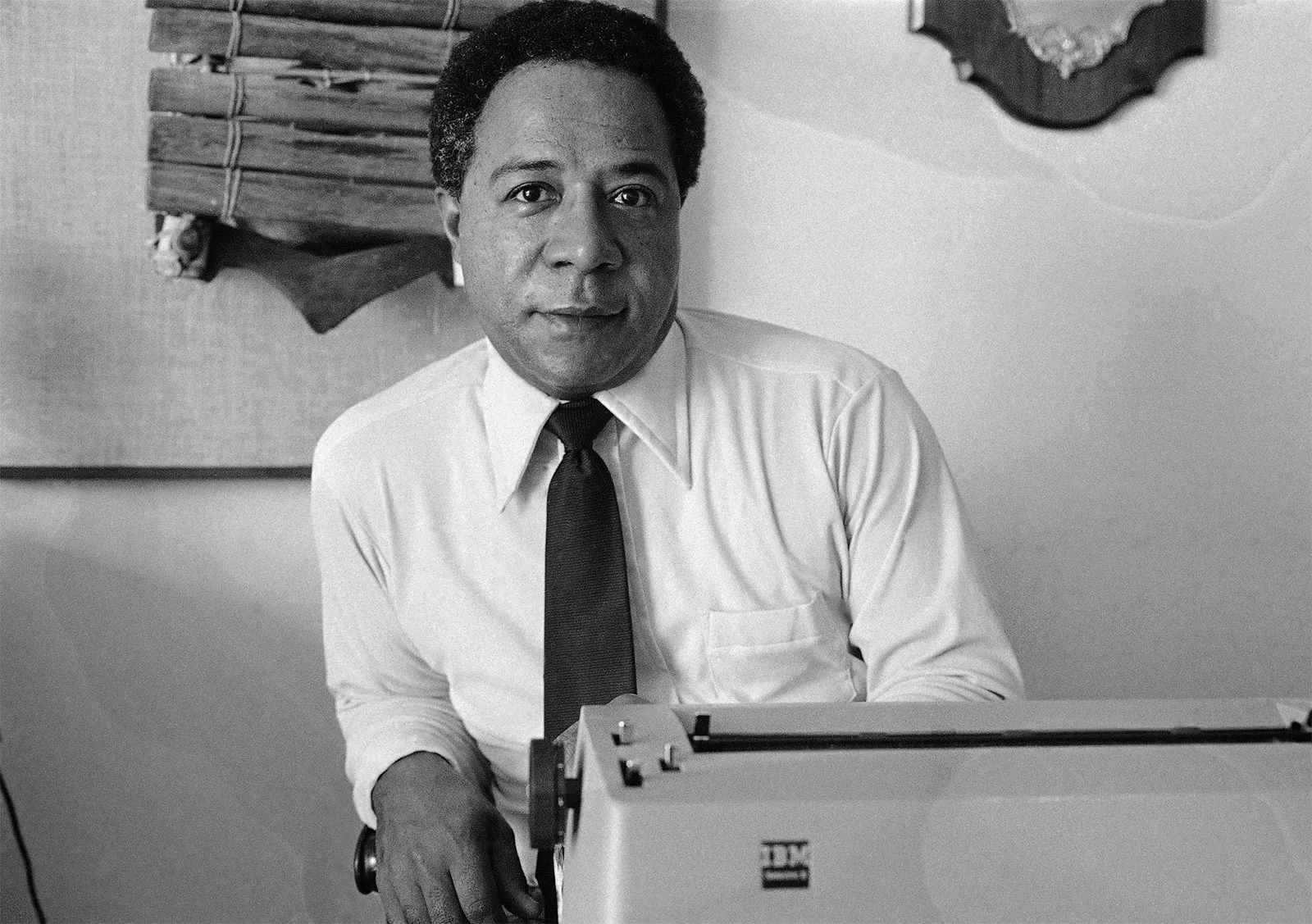

Alex Haley wasn’t in a rush.
Long before his name became tied to one of the most important books in American history, he was a young Black man listening closely to the stories his family told. Stories passed down not through textbooks, but through memory. Names. Places. Fragments of a past that slavery tried to erase but never fully could.
Before Records, There Was Memory
He was born in 1921 in Ithaca, New York, but much of his sense of identity came from the South, where oral history wasn’t just tradition, it was survival. Somewhere in those stories lived the name of an ancestor said to have been taken from Africa. A name that refused to disappear.
Learning the Craft the Long Way
Before Alex Haley became a writer, he spent nearly two decades in the U.S. Coast Guard. He didn’t enter as an officer or a journalist. He entered as a cook. While serving on ships, Haley began teaching himself how to write, often late at night, using rejection letters as motivation rather than discouragement. Writing wasn’t a shortcut for him — it was a skill earned slowly.
Listening Close Enough to Tell the Truth
After leaving the Coast Guard, Haley found his way into journalism. One of the most significant chapters of his life began when he interviewed Malcolm X. What started as an assignment became a deep collaboration built on trust, conversation, and careful listening. Haley didn’t attempt to soften or reshape Malcolm’s words. He allowed the story to be told honestly. The result was The Autobiography of Malcolm X, a book that continues to influence readers decades later.
The Story That Wouldn’t Let Him Go
Still, the story that lived with Haley the longest wasn’t Malcolm’s.
It was his own.
Chasing a History Meant to Be Forgotten
For more than 10 years, Alex Haley pursued the history of his family with a level of dedication few writers would attempt. He traveled across the United States and to Africa, digging through archives, ship manifests, and oral accounts. He searched for proof of people who were never meant to be remembered by official records. The work was slow. Often uncertain. And there were no guarantees the story would be accepted once it was finished.
When a Family Story Became a Cultural Moment
When Roots was finally published, it became more than a book. It became a cultural moment.
Families across the country gathered around their televisions to watch a story that centered Black ancestry with depth and humanity. For many viewers, it was the first time slavery was presented not as distant history, but as something personal — connected to bloodlines, names, and living descendants.
Why Telling the Story Fully Still Matters
Alex Haley did not tell the story to make people comfortable.
He told it because it needed to be told fully.
His work reminded the world that Black history doesn’t begin with slavery — and it doesn’t end there either. It lives in memory, persistence, and the courage to slow down long enough to tell the truth all the way through.