

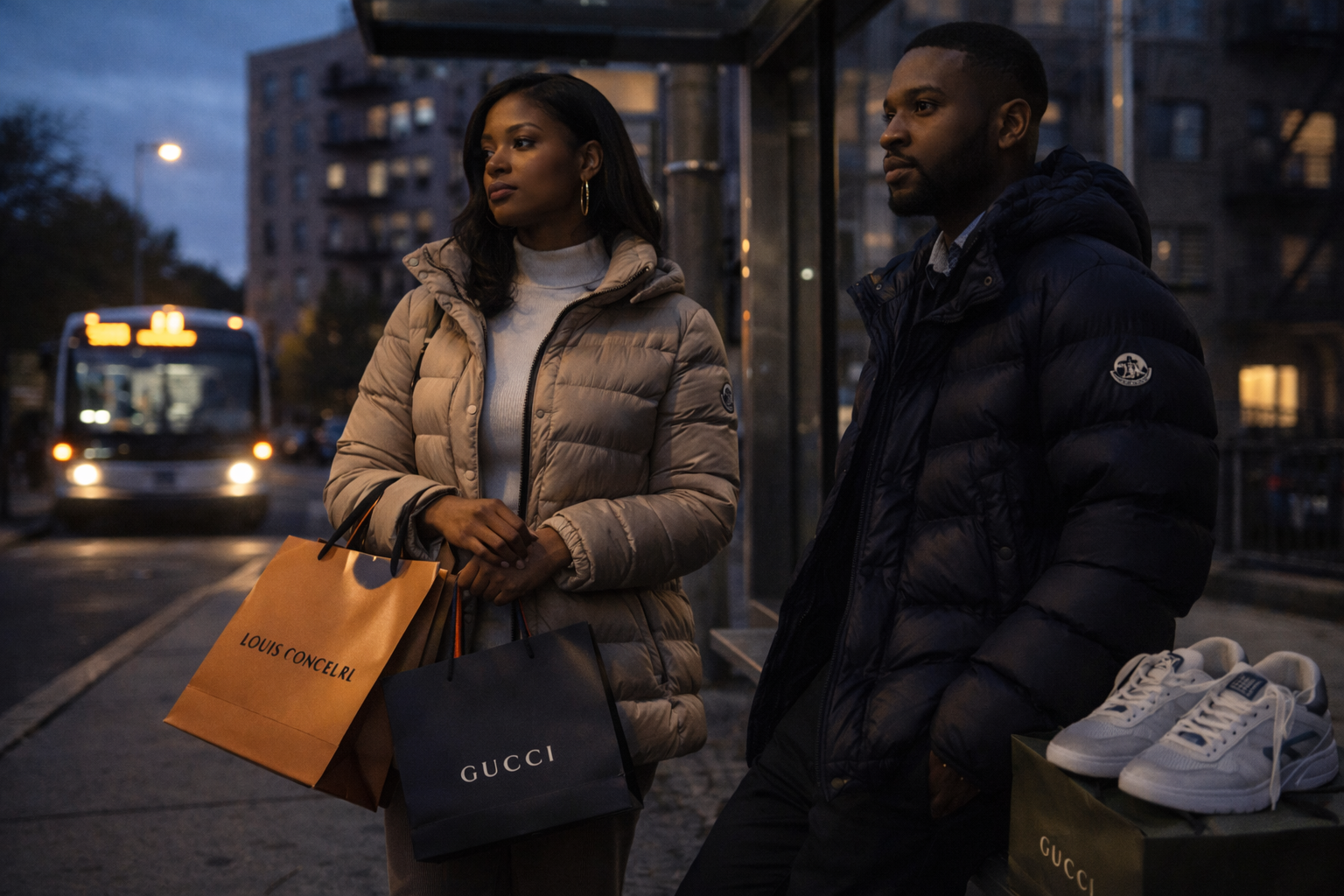

Looking Successful
There is a quiet pressure in the Black community that doesn’t get discussed honestly enough — the pressure to not look poor, even when poverty is the reality.
After generations of economic hardship, many Black families have developed an unspoken commitment to appearance. Not because they are irresponsible, but because looking broke has historically come with humiliation, disrespect, and danger. As a result, many people feel compelled to dress above their circumstances as a form of emotional armor.
Poverty With a Mask On
When you’ve been poor for so long, you don’t just struggle financially — you struggle psychologically. There is a deep desire to separate yourself from the stereotype of “being down bad,” even if only visually.
That’s why it’s not uncommon to see:
- Black kids wearing $300–$500 sneakers
- Teenagers in $900 jackets
- Young men prioritizing designer labels over savings
- Mothers pushing newborns in strollers costing $1,000 or more
- Families living in public housing, while dressed like luxury brand ambassadors
These choices aren’t random. They’re symbolic.
It’s not about fashion — it’s about refusing to look like the situation you’re actually in.
Image as Survival
For many Black youth, appearance becomes a shield. Being perceived as successful is seen as a form of protection against judgment, mockery, and social exclusion. In some environments, not having the “right” clothes can mean being ostracized, bullied, or seen as less worthy of respect.
So the pressure becomes internalized early:
“I may be struggling, but I won’t let you see it.”
That pressure doesn’t come from nowhere — it’s reinforced by peers, social media, music, and even family members who equate appearance with value.
What the Community Rewards
Here’s the uncomfortable truth:
Our community often celebrates looking wealthy more than becoming stable.
A young man can receive praise for wearing expensive clothes, but little recognition for:
- Graduating from college
- Learning a trade
- Building credit
- Starting a business
- Staying consistent in school
We applaud consumption but stay silent about achievement.
It’s easier to compliment a jacket than to acknowledge discipline. It’s easier to notice shoes than to notice sacrifice.