

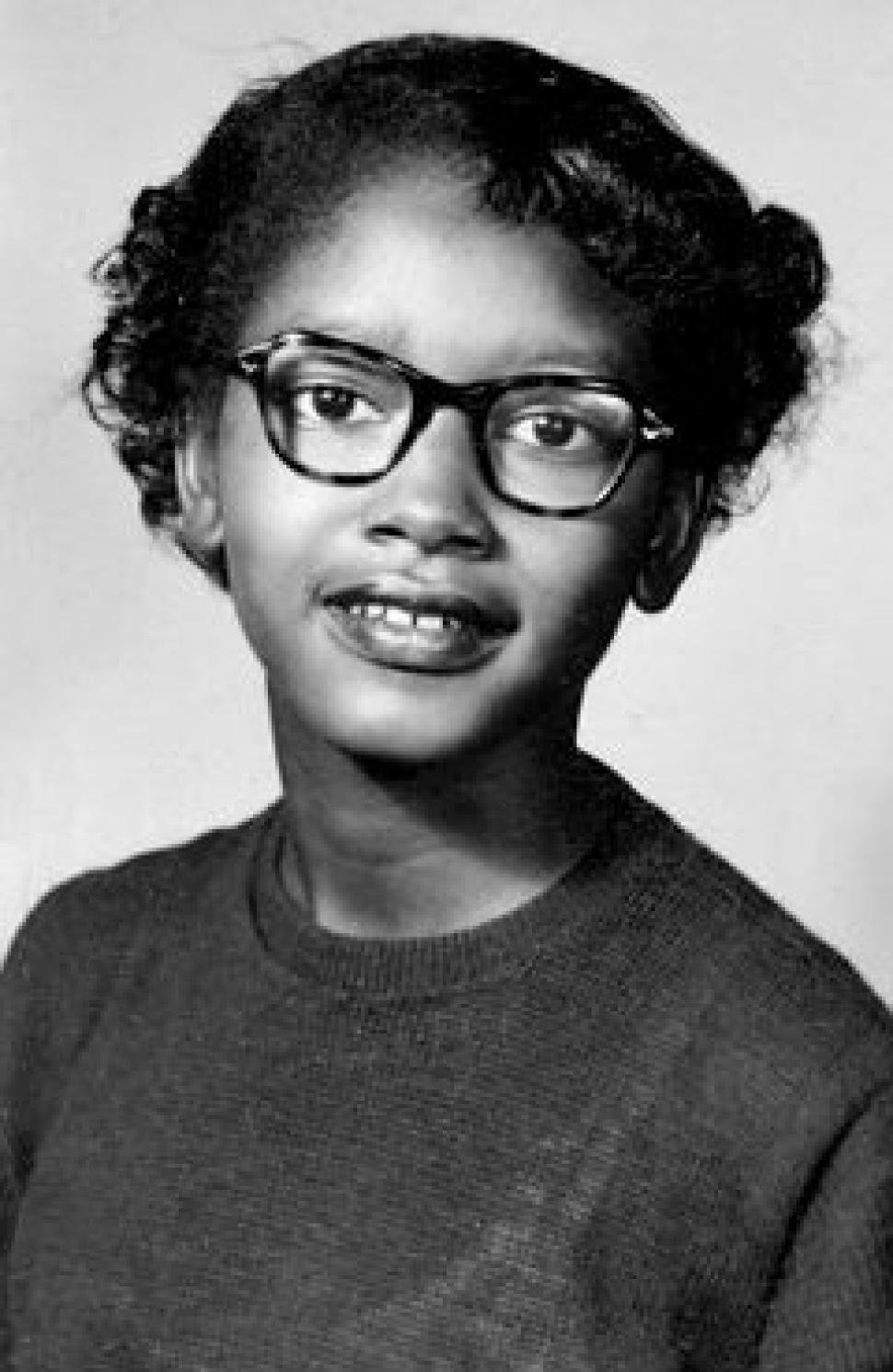

Her name was Claudette Colvin, and history did not protect her.
On March 2, 1955, Claudette Colvin refused to give up her seat on a Montgomery city bus. She was not loud or violent. She simply said no.
Police officers dragged her off the bus, handcuffed her, and threw her into a jail cell.
She was charged with:
- Violating segregation laws
- Disturbing the peace
- Assaulting a police officer
For a 15-year-old child, these charges were life-altering.
She was convicted. That conviction followed her for decades.
What Happened Next
Contrary to the heroic narratives often taught, Claudette Colvin did not become a celebrated figure overnight.
Instead:
- She was pushed out of the public narrative
- Civil rights leaders chose not to rally around her
- She became isolated in her own community
The reason was not her courage—it was her image.
Colvin was young, poor, dark-skinned, and later became pregnant. Leaders feared white America would not sympathize with her, and the movement could lose momentum.
The Part History Leaves Out
Despite being publicly erased, Claudette Colvin became a key plaintiff in Browder v. Gayle, the federal court case that ultimately ended bus segregation in Montgomery.
This case—not the boycott alone—forced Alabama to change the law.
Without Colvin’s testimony, the legal victory may not have happened.
Yet her name was barely mentioned.
A Lifetime Without Recognition
After the movement moved on, Claudette Colvin moved to New York City. She worked as a nurse’s aide for more than 30 years, raising her family and living quietly. She carried the consequences of bravery without the benefits of recognition.
Justice—Decades Too Late
In 2021, when Claudette Colvin was in her 80s, a judge finally expunged her juvenile conviction.
More than 65 years later, the system acknowledged what should have been obvious from the beginning: she should never have been treated like a criminal.
Why This Still Matters
Claudette Colvin’s story exposes a hard truth:
History doesn’t always honor courage—it edits it.
Her bravery was real, but it wasn’t convenient. And when justice movements prioritize comfort over truth, people like Claudette Colvin are the ones who disappear.