

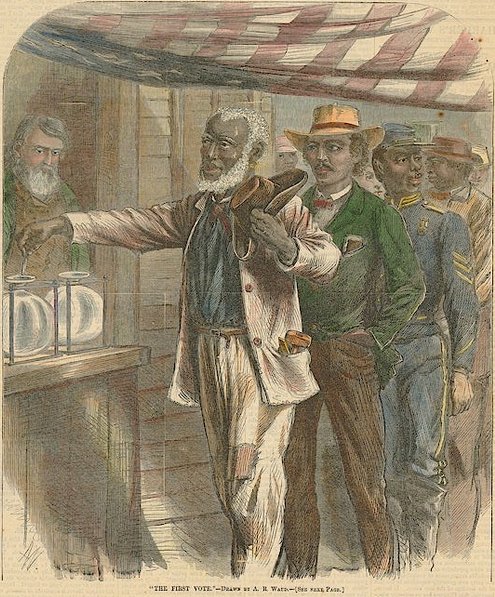

Black Men Won the Right to Vote
On January 8, 1867, a major, yet often overlooked, milestone in Black history occurred. On this day, Black men in Washington, D.C., were granted the legal right to vote. Making the nation’s capital one of the first places in the United States to extend suffrage to African Americans.
This historic change did not come easily—and it did not come quietly.
A Victory Over Presidential Opposition
The right to vote for Black men in Washington, D.C., became law after Congress overrode President Andrew Johnson’s veto. Johnson, who succeeded Abraham Lincoln after his assassination, strongly opposed efforts to expand civil and political rights for formerly enslaved people during the post–Civil War period.
Johnson vetoed the District of Columbia Suffrage Act. He argued that Black men were unfit for political participation. This a belief rooted in white supremacy and shared by many at the time. Congress, however, disagreed.
In a rare and powerful move, lawmakers voted to override his veto. Demonstrating a commitment—however imperfect—to Reconstruction and racial justice.
Why Washington, D.C. Mattered
At the time, Washington, D.C. had neither a governor nor a state legislature. Congress directly controlled the city. That made D.C. a testing ground for Reconstruction policies aimed at reshaping American democracy after slavery.
By granting Black men the vote in the nation’s capital, Congress sent a symbolic message. Democracy could not be rebuilt without Black participation.
This moment came two years before the ratification of the 15th Amendment in 1870. This would later prohibit nationwide the denial of voting rights based on race.
Reconstruction: Hope and Resistance
The vote in D.C. occurred during the early years of Reconstruction. A turbulent era when the country struggled to define freedom, citizenship, and equality in the wake of the Civil War.
For Black Americans, many of whom had been enslaved just years earlier. Voting represented dignity, power, and a voice in shaping their future. For others, especially former Confederates and segregationists, Black suffrage was viewed as a threat.
That resistance would soon lead to voter suppression, violence, and the eventual rollback of many Reconstruction gains.
The Legacy Today
While January 8, 1867, marked progress. It also reminds us that voting rights in America have always been contested—and still are.
From poll taxes and literacy tests to modern voter suppression laws, the struggle that began during Reconstruction continues today.
Remembering this date matters because it challenges the myth that voting rights were simply “granted” once and for all. They were fought for, defended, and in many cases, taken back—only to be fought for again.
Why This History Is Often Forgotten
Unlike constitutional amendments or famous court cases, local acts like the District of Columbia Suffrage Act rarely make textbooks. But these moments reveal how change actually happens: through pressure, persistence, and people willing to challenge power.
Black Men Won the Right to Vote