



To this day, Black Wall Street Still Makes People Uncomfortable. Before the phrase “generational wealth” became popular on social media, black Americans had already built it.
In the early 1900s, the Greenwood District in Tulsa was one of the most successful Black communities in the United States. This wasn’t symbolism. It was reality.
Greenwood had Black-owned banks, grocery stores, hotels, newspapers, schools, doctors’ offices, and luxury shops. Money circulated inside the community. Families owned land. Children saw professionals who looked like them. Independence wasn’t a theory — it was daily life.
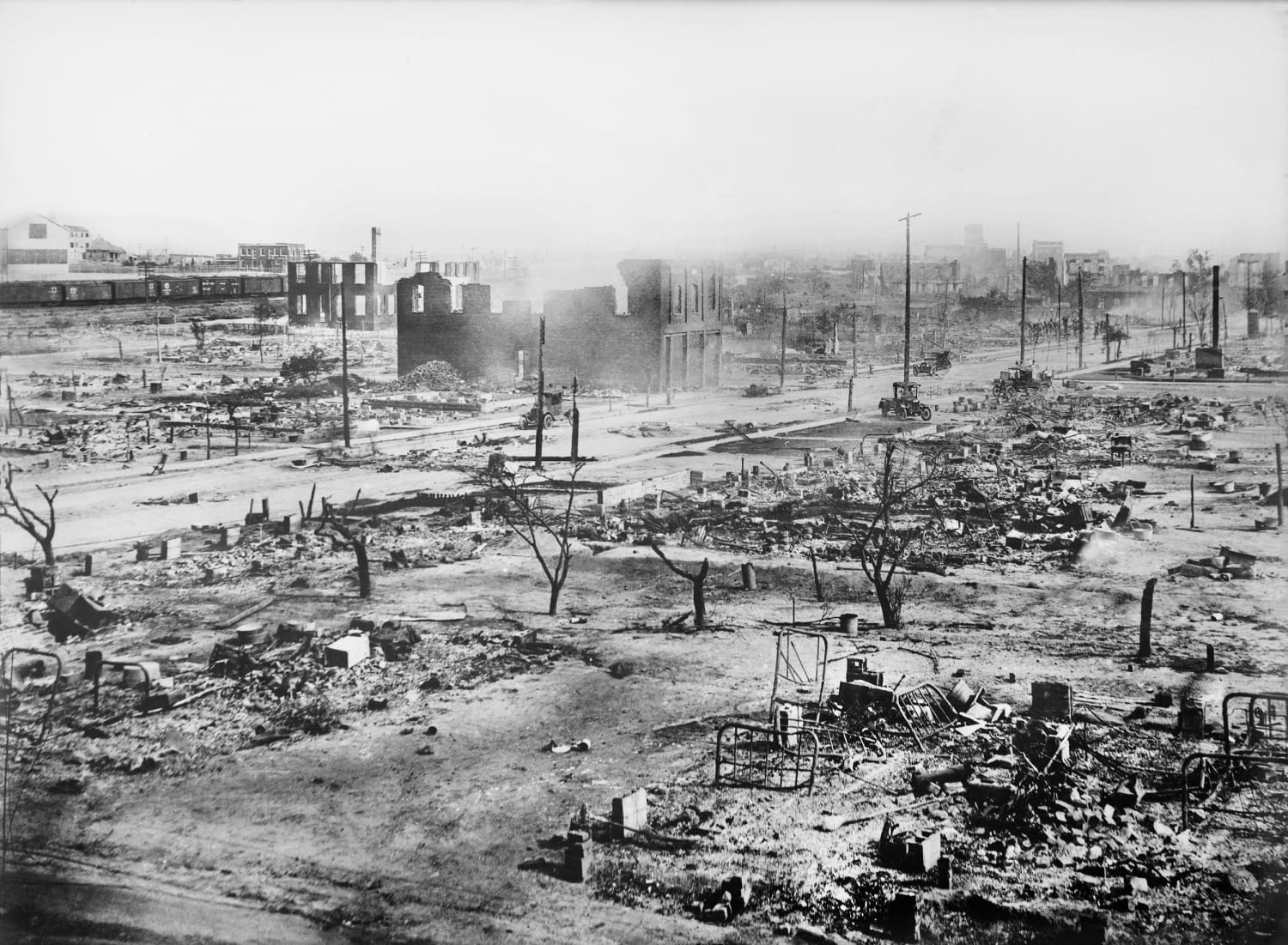
In 1921, a false accusation against a young Black man ignited white mob violence that destroyed Greenwood. Homes were burned, businesses looted, and entire blocks reduced to ash. Airplanes were even used to drop incendiaries — one of the first domestic aerial attacks on U.S. soil.
Hundreds of Black residents were killed. Thousands were displaced. Insurance claims were denied. No one was held accountable. Here’s the part that rarely gets discussed honestly: That Black Wall Street wasn’t destroyed because it failed. It was destroyed because it succeeded.
The narrative for decades framed the event as a “riot,” subtly shifting blame onto the victims. Only recently has it been widely recognized as what it was — a massacre and an intentional dismantling of Black economic power.
Even after the destruction, survivors rebuilt Greenwood with almost no outside help. Business reopened. They reconstructed homes. They refused to disappear. The loss of property, land, and businesses erased what could have been generations of inherited wealth.